

Inetbet casino Plinko
Introduction
Plinko looks almost too simple to deserve a serious breakdown. A ball drops from the top of the board, bounces between pegs, and lands in a slot with a set multiplier. That is the entire visual idea. Yet in practice, Inetbet casino Plinko creates a very specific kind of gambling session: fast, clean, easy to understand at first glance, but capable of producing very different results depending on the risk level, board setup, and the player’s own expectations.
I have seen many players approach Plinko as if it were a lighter version of a slot. That is usually the first mistake. Plinko does not build tension through reels, symbols, paylines, Inetbet Casino bonus guide rounds, or expanding features. Its appeal comes from something else: direct randomness, immediate outcomes, and a visible path between stake and result. You watch the ball travel. You feel every bounce. And because the route is displayed in front of you, the game often feels more transparent than it really is.
That is exactly why Plinko deserves a closer look. On the surface, it is one of the easiest casino games to understand. Under the surface, it is a game of distribution, variance, and pacing. Before trying Plinko at Inetbet casino, it helps to know what the board is actually doing, why low multipliers appear so often, why high-risk settings change the entire character of the session, and why this format suits some players much better than others.
What Plinko is and why it attracts so much attention
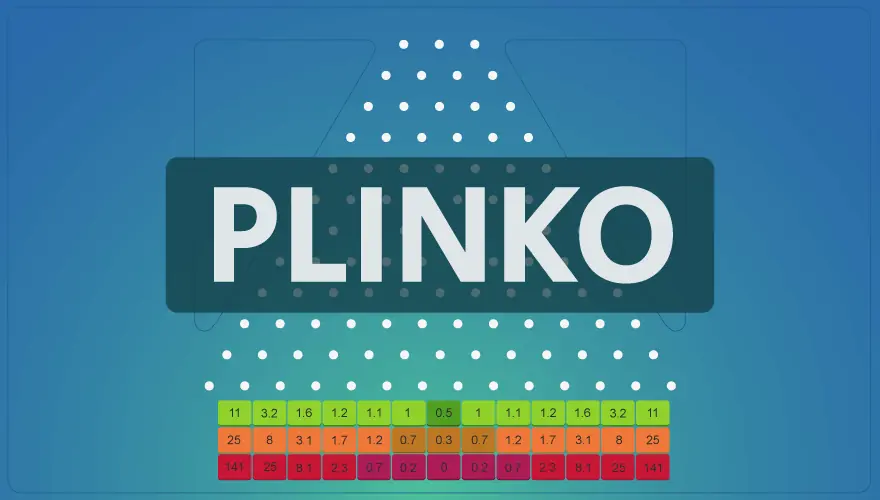
At its core, Plinko is a drop-style casino game built around a vertical board filled with pins or pegs. The player chooses a stake, often selects a number of rows and a risk setting, and then releases a ball from the top. As the ball collides with the pins, it moves left and right until it reaches one of the payout slots at the bottom. Each slot carries a multiplier, and that multiplier determines the return on the stake.
The format stands out because it removes almost all decorative layers that are common in online gambling. There are no themed reels, no character symbols, no story, and often no long animations. Instead, the entire experience is reduced to a single visible event. That kind of clarity is a major reason why Plinko has become so noticeable across modern casino platforms.
Another reason is psychological. Many games hide their logic behind spinning reels or card sequences. Plinko appears to show the process openly. The ball falls in full view, and every bounce seems meaningful. This creates a strong illusion of traceable randomness. Players feel involved because they can follow the path, even though the final landing is still governed by the game’s underlying probability model.
There is also a practical reason for Plinko’s appeal: it is extremely easy to start. A new player does not need to learn paylines, side bets, strategy charts, or bonus conditions. The entry barrier is low. But the low barrier should not be confused with low complexity in outcomes. Once risk settings change, the same simple board can behave like a completely different product.
How the Plinko board actually works in a real session
The basic mechanic is straightforward. You set the bet amount, choose the board parameters available in the version offered by the platform, and drop the ball. On its way down, the ball hits peg after peg, shifting direction repeatedly. The final slot at the bottom determines the multiplier. In most versions of Plinko, the central slots tend to pay lower multipliers and appear more often, while the edge slots offer larger multipliers but are reached much less frequently.
This matters because the board is not designed to distribute outcomes evenly. It is built around a probability curve. Outcomes near the middle are common. Extreme landings are rare. The visual layout usually reflects this, with modest returns clustered around the centre and the largest values placed near the edges.
In practical terms, that means a player should not judge the game by the size of its highest multiplier alone. The top number can be impressive, but it is not the number that defines the average session. What defines the session is how often the ball settles into low or medium multipliers and how long it takes for a rare result to appear, if it appears at all.
One of the most useful ways to understand Inetbet casino Plinko is to separate three layers of the experience:
- Visual movement: the ball bouncing through the pins.
- Probability structure: the weighted distribution behind the board.
- Session rhythm: the speed at which repeated drops create gains, losses, or long flat stretches.
Players often focus on the first layer because it is the most visible. The second and third layers are the ones that actually shape the bankroll experience.
| Element | What the player sees | What it means in practice |
|---|---|---|
| Ball drop | A simple release from the top of the board | Each drop is a complete betting event with a fast result cycle |
| Peg collisions | Left-right movement that looks organic | The path feels readable, but the outcome still follows programmed probability |
| Bottom multipliers | Clear values from low to high | Large numbers are attractive, but lower values usually dominate the session |
| Board settings | Rows and risk choices in some versions | These settings can change the entire payout profile and emotional tempo |
Why the game feels exciting even though the interface is minimal
Plinko’s tension comes from delay and visibility. A slot spin often resolves in a blur. Plinko stretches a single result over a short but noticeable path. That short descent is enough to create suspense because the player can see the possibility of a better landing right until the final bounce.
This is one of the more interesting things about the format: the game uses a very small amount of animation to create a strong emotional response. The board is static, the action is repetitive, and yet the landing still feels dramatic. In my view, this is why Plinko works especially well for players who enjoy quick rounds but still want a moment of anticipation.
There is also a strong rhythm to repeated drops. A session can move very quickly, especially when a player uses rapid play or auto mode. That pace can be deceptive. Because each round is so short and the interface is so clean, it is easy to underestimate how many bets are being placed in a short period. This is one of the first practical warnings I would give any player trying Plinko for the first time.
It does not flash like a video slot, but the bankroll can move just as fast, sometimes faster. A memorable detail here is that Plinko often feels calmer than it really is. The minimalist design lowers the noise, not the financial intensity.
Risk levels, rows, and why one version of Plinko can feel nothing like another
Many versions of Plinko include adjustable risk levels, and some also let the player choose the number of rows. These are not cosmetic options. They determine how the session behaves.
At lower risk settings, the board usually produces a tighter spread of outcomes. That means more frequent landings in moderate zones and fewer dramatic spikes. The experience is steadier, though not necessarily profitable or safe in any guaranteed sense. It simply tends to produce fewer extreme swings.
At higher risk settings, the distribution becomes more aggressive. The board may offer much larger top multipliers, but the path toward them becomes much harsher. In real play, this often translates into long stretches of weak returns interrupted by occasional sharp hits. Some players enjoy that because it gives the game a chase element. Others find it draining because the board can feel cold for extended periods.
The row count can matter as well. More rows usually mean a longer path and a wider distribution of possible final positions. That can increase the sense of suspense and, depending on the model used, may also support a broader multiplier range. Fewer rows often compress the experience and make the rounds feel even quicker.
The practical takeaway is simple: there is no single Plinko experience. A low-risk, lower-row setup can feel methodical and almost flat. A high-risk, expanded board can feel tense, streaky, and emotionally expensive.
| Setting | Typical session feel | What a player should expect |
|---|---|---|
| Low risk | Smoother, less dramatic | More frequent small or mid-range returns, fewer standout moments |
| Medium risk | Balanced but still variable | A mix of ordinary results and occasional stronger multipliers |
| High risk | Sharp swings, longer dry spells | Rare but larger outcomes, with much tougher short-term variance |
What players need to understand about probability, variance, and expected outcomes
If I had to reduce Plinko to one important lesson, it would be this: the visible path of the ball should not distract from the mathematics of repeated drops. The game is not about predicting where the next ball will land. It is about accepting that most results cluster in common zones while rare outcomes carry the promotional appeal.
That distinction matters because Plinko can encourage pattern-seeking behaviour. After several drops, players may start believing that the board is “due” for an edge hit or that one side is running hotter. In practical terms, that belief is not a reliable basis for decision-making. Each round is a separate event governed by the product’s randomisation logic.
Another point that deserves clarity is volatility. In Plinko, volatility is not hidden inside bonus rounds or rare symbol combinations. It is exposed directly through the multiplier map and the risk setting. That makes the game easier to read than many slots, but not easier to beat.
Before launching a session, a player should keep four things in mind:
- High multipliers are the exception, not the session norm.
- Fast rounds can accelerate losses quietly.
- Changing risk level changes the personality of the game.
- Short-term results can look meaningful without actually indicating a trend.
One of the strongest observations I can make about Plinko is that it teaches bankroll discipline very quickly. Not because it is educational by design, but because it strips away distractions. When the game is not giving enough back, the pattern becomes visible fast. There is nowhere for weak value to hide. The full picture of payment methods lives in best Inetbet Casino legality, including the less common ones.
How Plinko differs from slots and other common casino formats
The biggest difference between Plinko and classic online slots is structural. A slot is a layered product. It uses reels, symbol weighting, bonus features, free spins, and often a theme-driven presentation to shape the overall experience. Plinko is much more direct. One drop, one path, one multiplier.
That directness changes how the player perceives control and randomness. Slots often feel opaque. You press spin and wait for the result. Plinko gives the impression that you are watching the result unfold physically. That does not make it more controllable, but it does make the randomness feel more tangible.
Compared with table games, Plinko is also very different. It does not offer strategic decisions in the way blackjack or some best Inetbet Casino poker page for online casino players variants do. There is no meaningful in-round skill element. The decision-making happens before the drop: stake size, risk level, number of rows, and session length. After that, the board takes over.
Against crash games, Plinko shares the appeal of fast rounds and visible tension, but the emotional texture is different. Crash games revolve around timing and cash-out decisions. Plinko removes that decision point. The player commits to the drop and accepts the landing. For some, that feels cleaner. For others, it feels too passive.
This is why I would not describe Plinko as a slot substitute in the usual sense. It is closer to a probability display than a narrative casino product. If a player enjoys bonus hunts, feature variety, and changing reel behaviour, Plinko may feel too stripped back. If the player prefers immediate outcomes and clear structure, it can be a better fit.
Where Plinko performs well and where its limits show
Plinko has several clear strengths. First, it is accessible. A new player can understand the board within seconds. Second, it is transparent in presentation. The payout zones are visible, the action is short, and the relationship between stake and multiplier is easy to follow. Third, it offers flexible session styles through risk settings, which gives the same core format more than one practical use.
It also works well for players who want a clean experience without heavy visual clutter. That may sound like a small point, but it matters. Many modern casino products are overloaded with effects, side panels, and layered animations. Plinko avoids most of that.
Its limitations are just as important. The first is repetition. Because the core loop never changes, some players lose interest quickly. There are no evolving stages, no bonus triggers, and little sense of progression. The second is emotional distortion. The rare top multipliers can dominate attention even when the session is mostly made up of poor or modest results. The third is speed. A player can move through a large number of rounds with very little friction.
There is also a subtle weakness that does not get mentioned enough: Plinko can feel fairer than it feels enjoyable. The board is open, the multipliers are visible, and the randomness is easy to grasp. But that clarity does not guarantee a satisfying session. In fact, the honesty of the design can make dry stretches feel even more exposed. A quick read of Aviator crash game details answers most questions about limits and account settings.
Who Plinko is likely to suit and who may prefer another format
In my experience, Plinko suits players who value simplicity, fast results, and visible probability structure. It can also appeal to users who dislike the theatrical side of slots and want something more stripped down. If someone enjoys testing different stake sizes and risk settings while keeping the rules easy to follow, this format makes sense.
It may also suit players who want short sessions. Because each round resolves quickly, it is possible to set a clear limit and evaluate the session without much delay. That said, this only works when the player is disciplined. Without limits, the same speed becomes a disadvantage.
Plinko may not suit players who want narrative entertainment, bonus depth, or the feeling that different rounds offer different types of engagement. It is also a poor match for anyone who tends to chase rare outcomes emotionally. High-risk Plinko can be especially frustrating for players who focus too heavily on the biggest multiplier displayed on the board.
If someone wants strategic influence during play, Inetbet Casino roulette and account details are usually a better choice. If someone wants more variety and feature-driven suspense, slots are often the better fit. If someone wants a clean, repetitive, high-clarity gambling format, Inetbet casino Plinko is much closer to the mark.
What to check before launching Plinko at Inetbet casino
Before starting, I would suggest looking at the version’s available settings rather than jumping straight into live play. Not every Plinko board behaves the same way, and the details matter more than many players expect.
Focus on these points first:
- Risk level options: understand whether the board offers low, medium, and high settings, and remember that these can radically change the session profile.
- Multiplier spread: do not look only at the maximum figure; pay attention to how many low-return slots dominate the bottom row.
- Bet speed: if auto-play or rapid drops are available, decide your pace before you begin.
- Session limits: set a budget and a stop point early, because Plinko can burn through volume faster than its calm interface suggests.
- Demo availability: if a practice mode exists, use it to understand the board’s rhythm before staking real money.
A useful practical rule is to judge Plinko by how it behaves over a sequence of drops, not by one lucky result. This sounds obvious, but it is where many players misread the format. A single edge hit can make the board look generous. A longer sample usually tells the more realistic story.
Final verdict on Inetbet casino Plinko
Inetbet casino Plinko offers a gambling experience built on clarity, speed, and visible randomness. Its key strength is not complexity but compression: one short action contains the entire tension of the round. That makes the format easy to learn, easy to follow, and easy to revisit in short bursts.
What makes Plinko worth trying is also what makes it risky. The board looks simple, but the actual session experience can change sharply with different risk settings. Low-risk play may feel controlled but uneventful. High-risk play can produce stronger spikes, but often at the cost of long barren stretches and faster bankroll pressure. The game does not hide this well, which is both a strength and a warning.
For players who want direct outcomes, minimal clutter, and a format where the probability structure is easier to read than in many slots, Plinko has real value. For players who need feature variety, strategic input, or a richer sense of progression, it may feel too narrow very quickly.
My honest conclusion is simple: Plinko is not interesting because it is trendy. It is interesting because it reduces casino play to its bare essentials and, in doing so, exposes both the appeal and the danger of fast random outcomes. If you approach it with realistic expectations, sensible limits, and an understanding of how risk settings reshape the board, it can be a sharp and worthwhile format. If you approach it as an easy path to big multipliers, it can become expensive faster than its calm design suggests.
FAQ
What should be checked before launching Plinko in real-money play?
The selected mode and stake settings should be confirmed before each ball drop. Also make sure the account is logged in so balance updates and game history record correctly.
Can the Plinko demo mode be used to understand multipliers and risk level?
Yes, the demo mode is designed for free practice with the same ball-drop mechanics and multiplier outcomes. It helps players get a feel for how quickly the volatility can build without affecting their real balance.